What is the UBO-register?
4 Min
December 24, 2025
Author:
Garry
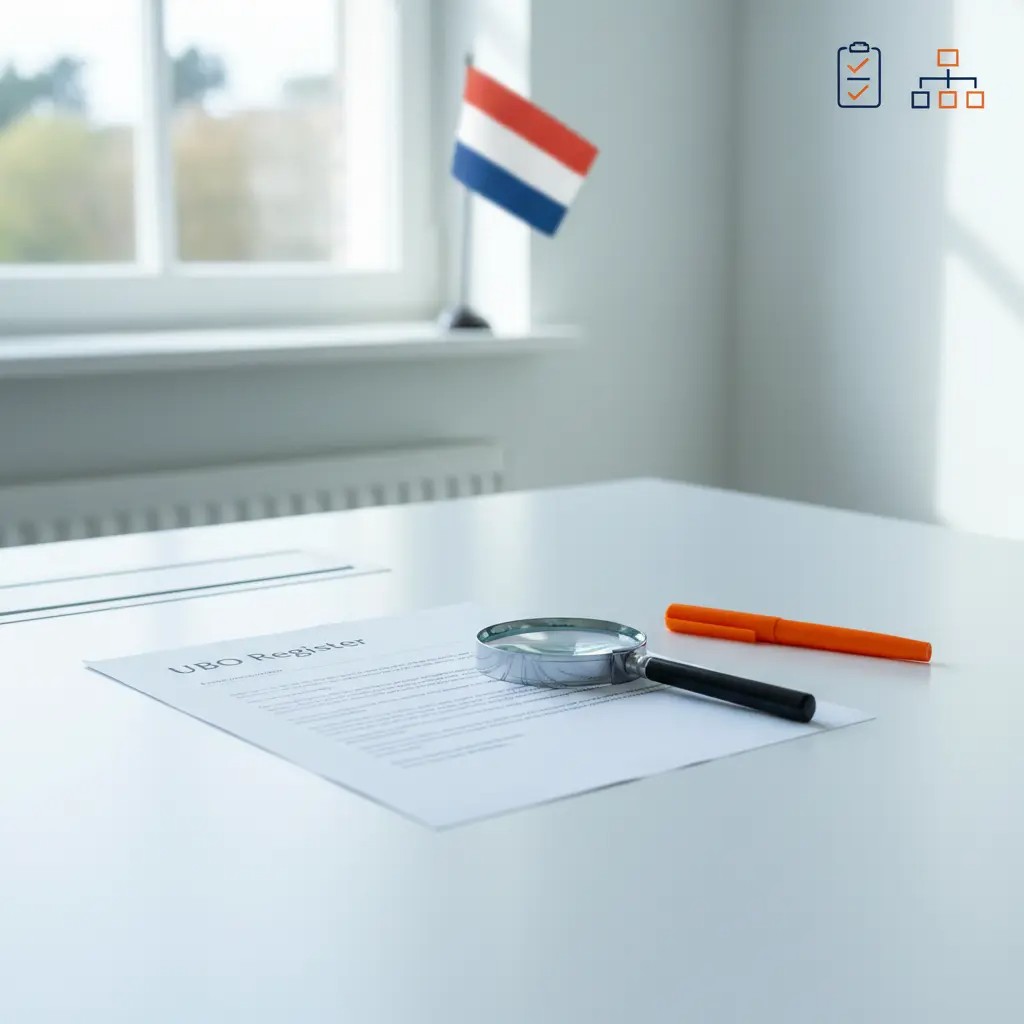
UBO stands for Ultimate Beneficial Owner. In simple terms, a UBO is the real person who ultimately owns or controls a company. This can be through shareholding, voting rights, or other forms of control. Even if a company is managed by directors or holding entities, Dutch authorities always want to know who is behind the business.
The UBO-register in Netherlands exists to increase transparency and reduce financial misuse. The Netherlands, like other EU countries, introduced this register as part of anti-money laundering and counter-terrorism regulations. The idea is straightforward: authorities should be able to identify who benefits from a company’s activities.
For international founders, this often comes as a surprise. Many assume that once a Dutch BV is registered, ownership details stay private. In reality, the Netherlands UBO register is a mandatory compliance step, separate from Chamber of Commerce registration.
At FirmNL, we explain this early because UBO compliance is not optional. It applies to almost every Dutch company and foundation, regardless of where the founders live. Ignoring it can create issues later, especially when opening bank accounts or during audits.
Who Must Register as a UBO in the Netherlands
In the Netherlands, almost every legal entity must register its UBOs. This includes Dutch BVs, NVs, foundations, associations, and partnerships. For most international founders, this requirement applies the moment their Dutch BV incorporation is completed.
A person is usually considered a UBO netherlands if they directly or indirectly:
- Own more than 25% of the shares
- Control more than 25% of the voting rights
- Have effective control through other means
If no individual meets these criteria, the company must register a pseudo-UBO. This is typically a senior managing director. Many founders are unaware of this rule, which often leads to incomplete or incorrect filings.
We often see confusion in group structures or holding setups. When ownership flows through multiple companies or countries, identifying the real UBO becomes less obvious. Still, Dutch law requires tracing ownership until the natural person is identified.
This is why we always recommend handling UBO registration together with company formation. At FirmNL, we guide founders through UBO netherlands identification early, so there are no surprises during banking or compliance checks.
What Information Is Recorded in the UBO-register
The UBO-register does not just record names. It collects specific information that helps authorities identify who controls or benefits from a company. This is why accuracy matters from the start.
For each UBO, the following details must be submitted:
- Full name and date of birth
- Nationality and country of residence
- Nature and extent of ownership or control (for example, shareholding range)
- Supporting documents proving ownership or control
Some of this information is visible to certain parties, while other parts are accessible only to authorities. Even so, all data must be correct and kept up to date.
We often see founders underestimate this step and submit partial details just to “get it done.” That usually creates issues later, especially during bank onboarding or compliance reviews. Incorrect or missing UBO data can delay opening a business bank account in the Netherlands, payments, or future changes in company structure.
At FirmNL, we treat UBO registration as part of proper company setup, not as a formality. Getting it right once avoids repeated explanations and compliance stress later.
Is the UBO-register Public and Who Can Access It
Yes, the Netherlands UBO register is partly public, but not everything is visible to everyone. This is an important point many founders misunderstand.
Certain basic details of a UBO can be accessed by the public. This usually includes:
- First and last name
- Month and year of birth
- Nationality
- Country of residence
- Nature and range of ownership or control
However, sensitive information is not public. Exact addresses, full dates of birth, and supporting documents are accessible only to authorities and specific institutions, such as banks and regulators.
In practice, public access is meant to increase transparency, not expose founders unnecessarily. Still, founders should be aware that their involvement in a Dutch company may be visible at a basic level. This is standard across most EU countries and not unique to the Netherlands.
We explain this clearly to international founders early, especially those coming from jurisdictions where ownership details are fully private. Knowing what is visible helps founders make informed structuring decisions from the start.
What Happens If You Do Not Register or Update UBO Details
UBO registration is not optional. If a company fails to register its UBOs, or does not update changes on time, it is considered non-compliant under Dutch law. This can lead to penalties, warnings, and increased scrutiny from authorities.
In practice, the first impact is usually operational. Banks may freeze or delay account openings, payment providers may request additional checks, and notaries may refuse to process changes. For international founders, this often becomes a bottleneck at the worst possible time.
Another common issue is outdated information. Changes in shareholding, new investors, or restructuring must be reflected in the UBO-register. Many founders forget this step after incorporation, which later creates compliance gaps during audits or due diligence.
At FirmNL, we always treat UBO registration as an ongoing responsibility, not a one-time task. We guide founders on initial registration and remind them when updates are required, so compliance never becomes a growth blocker.
A properly maintained UBO-register keeps your Dutch company clean, bankable, and trusted — exactly how it should be from day one.
Read More: How to Create a Holding Company in the Netherlands?
FAQs – UBO-register Netherlands
1. Is UBO registration mandatory for all Dutch BVs?
Yes, almost all Dutch BVs must register their UBOs. This applies to both local and foreign founders. Even if ownership is held through other companies, the Netherlands requires identifying the real individuals behind the structure.
2. Do I need to update the UBO-register after company formation?
Yes. Any change in ownership, control, or management that affects UBO status must be updated. This includes new shareholders, restructuring, or changes in control percentage. Not updating on time can create compliance issues.
3. Can UBO registration affect my bank account or payments?
Yes, very often. Banks and payment providers rely on UBO data during onboarding and reviews. Incorrect or missing UBO details can delay account opening, trigger additional checks, or even block transactions.



Ready to Launch
Your

Dutch Business
Dutch
Business
FirmNL specializes in helping foreign entrepreneurs establish a presence across the EU. From Dutch BV incorporation to tax compliance, sales outsourcing and EU fulfillment — we provide solutions tailored to your goals.