Netherlands vs Germany: Which Is Better for Your European Headquarters?
4 Min
November 5, 2026
Author:
Garry
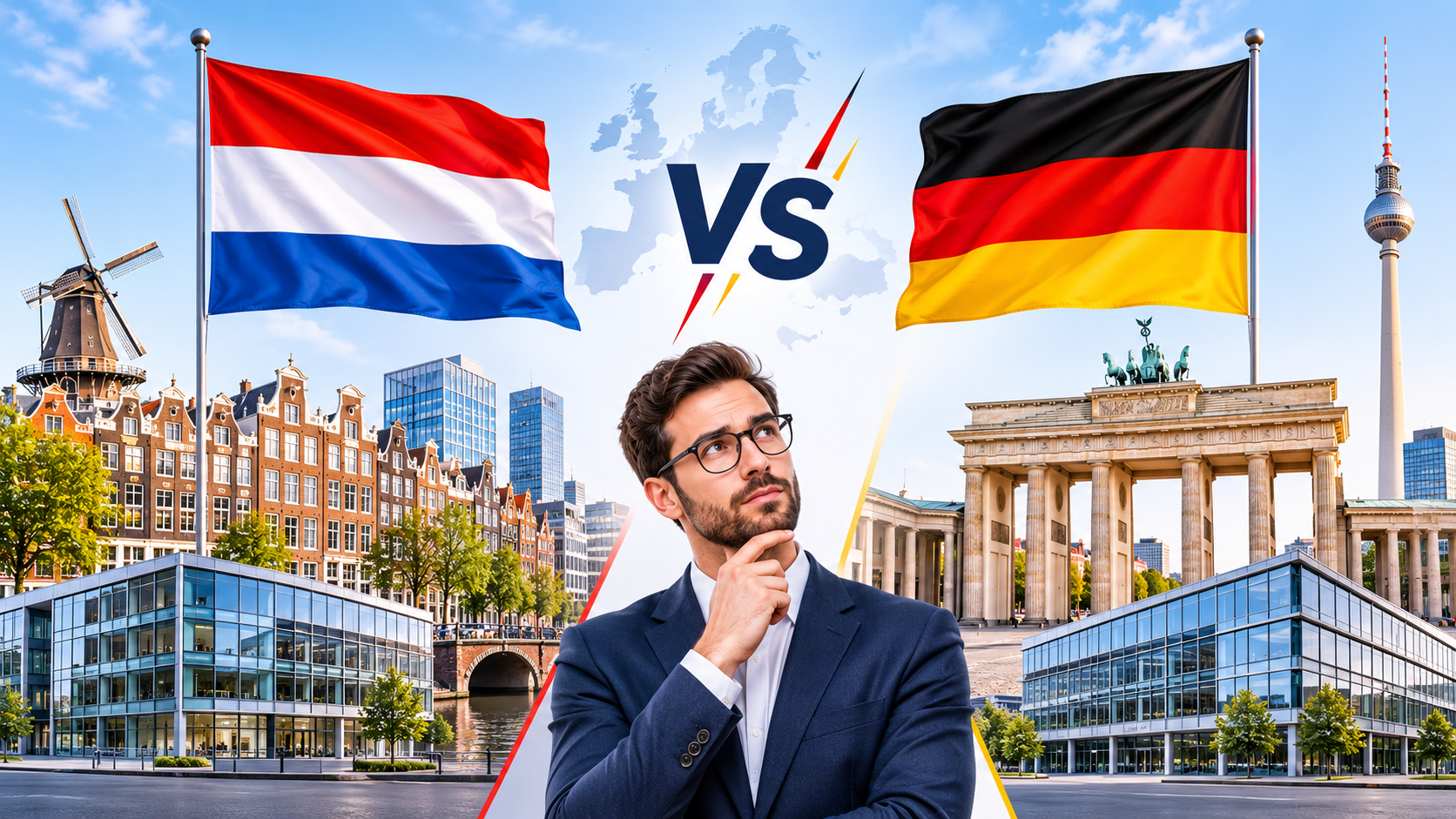
When a business plans to expand into Europe, one of the first decisions is which country to choose as its base.
For many businesses, the choice is between the Netherlands and Germany. Both countries allow businesses to sell across the EU and have good transport links. But which country is the better choice for your business?
Choosing between the Netherlands and Germany for business depends on your costs, customers, and plans for growth.
The Netherlands is often a good choice for businesses that import goods, sell online, or want to start with lower costs. Germany may be a better choice for businesses that mainly sell to German customers or plan to hire more staff there.
However, the starting cost is not the only thing to consider. The Netherlands may seem cheaper because of its taxes, but its hourly labour costs were the third highest in the EU in 2025. Germany may seem more expensive today, but its corporate tax rate is set to fall from 2028 and reach 10% by 2032. This means the country that costs less at first may not be cheaper in the long run.
This guide compares the Netherlands and Germany in four areas: setting up a company, taxes, hiring staff, and shipping goods. It also includes a simple checklist to help businesses choose the right country.
Why Businesses Choose the Netherlands for Their EU Base
The Netherlands is a small country, but it is an important entry point for businesses selling in Europe. Many foreign businesses choose it because setting up a company is simple and goods can easily reach other European countries. Here are the main reasons:
Simple company setup: The most common company type in the Netherlands is a BV (private limited company). You do not need a minimum amount of money to start one. Foreign individuals and companies can own and manage a BV without living in the Netherlands. Businesses planning to enter the Dutch market can learn more about the Dutch company registration process and requirements before starting the process.
Lower tax on smaller profits: Companies pay 19% tax on profits up to €200,000 and 25.8% on profits above €200,000. Businesses that earn money from certain patents or software they develop may also pay a lower tax rate of 9% on that income.
Good transport links: Rotterdam is Europe's largest port. Goods arriving there can be sent to other European countries by road, rail, or river. Cities such as Tilburg and Venlo are also popular places for warehouses and distribution centres because goods can be moved easily from there to other European markets. Many international brands store their products in these cities before sending them to customers.
Easy to work in English: Many Dutch businesses speak English and work with companies from other countries. This makes communication easier for foreign business owners who manage their company from abroad.
Why Businesses Choose Germany for Their EU Base
Germany is a good choice for businesses that want to sell to a large number of customers and build a long-term presence in Europe. It has a large customer base, a strong industrial sector, and well-established local businesses. Here are the main reasons:
The largest market in the EU: Germany has around 84 million people, compared with about 18 million in the Netherlands. This gives businesses access to more potential customers. If most of your customers are in Germany, setting up a company there can make selling easier.
Strong industry: Germany is a good fit for businesses in manufacturing, engineering, and technology. It has skilled workers and many suppliers that businesses can work with.
Build trust with local customers: Many German customers prefer to buy from businesses with a local presence. Having a German company, a German address, and local invoices can make your business look more familiar and trustworthy.
Lower taxes in the future: German companies currently pay around 30% to 33% in corporate taxes, including local taxes. From 2028, the federal corporate tax rate is set to fall each year. This could reduce the total tax businesses pay over time.
Setting up a business in Germany can cost more and involve more paperwork. Companies also generally pay more tax today than they would in the Netherlands.
Netherlands vs Germany: Which Is Better for Your Business?
Now that you know what each country offers, let us compare them side by side. If you are deciding whether to set up your EU HQ in the Netherlands or Germany, focus on four main things: how easy it is to start your business, how much tax you pay, how much it costs to hire staff, and how easily you can send goods to customers.
How Easy Is It to Set Up a Company?
The Netherlands is generally easier and cheaper for starting a company. You can set up a Dutch BV (private limited company) without a minimum share capital. Foreign owners can also complete much of the process from abroad.
In Germany, you need €25,000 in share capital to start a GmbH, and at least €12,500 must be paid before registration. You can also start a smaller company called a UG with as little as €1. A GmbH also needs a German business address and approval from a German notary.
How Much Corporate Tax Will You Pay?
Let’s say your company makes €300,000 in taxable profit in one year.
In the Netherlands, you pay 19% tax on the first €200,000 and 25.8% on the remaining €100,000. This brings your total tax to €63,800, or about 21% of your profit.
In Germany, if the total tax rate is around 30%, you would pay about €90,000 in tax on the same profit. These figures are examples.
The actual amount you pay depends on your business expenses, tax deductions, company structure, and location. Proper accounting and bookkeeping services can help businesses maintain financial records and track their expenses. In Germany, the local business tax also varies from one city to another.
How Much Does It Cost to Hire Staff?
Hiring staff costs a lot in both countries, but more in the Netherlands. In 2025, an employee cost an employer about €47.90 per hour in the Netherlands. That is the third highest in the EU, where the average was €34.90. Germany’s average is lower than the Dutch one.
The Netherlands also has a tax benefit for some foreign employees, called the expat ruling. Under it, an employer can pay part of an eligible employee’s salary tax-free. This helps if you bring in skilled people from abroad.
The benefit is getting smaller. From 1 January 2027, the tax-free part drops from 30% to 27%, and the minimum salary needed to qualify rises to €50,436.
Which Country Is Better for Shipping and Selling Across the EU?
The Netherlands is a good choice for businesses that bring goods into Europe from other countries. Its ports, roads, and warehouse locations make it easier to receive and send products across the EU. Germany, on the other hand, has a much larger customer market. It may be a better choice if you want to sell mainly to German customers.
You can sell to customers across the EU from either country. However, you may need to register for VAT in other countries, depending on where you store your goods and how you sell them.
Choose the Netherlands if you want an easy route for moving goods across Europe. Choose Germany if your main goal is to reach more customers in the German market.
Netherlands or Germany for European Headquarters: Which Fits Your Business?
The comparison shows that both countries have their own advantages. The right choice depends on what your business needs. Companies planning to establish a European presence should also consider the benefits and challenges of expanding into the Netherlands before making a decision. Use the lists below to see which country suits your business better.
The Netherlands may be a better choice if you:
- Import goods into Europe
- Run an online store or a distribution business
- Want to start a company with lower upfront costs
- Plan to set up a holding company or hire a small team
Germany may be a better choice if you:
- Sell mainly to German customers
- Plan to hire many employees or open a factory
- Want your business to be close to Germany's large customer market
You can also use both countries. For example, your Dutch company can manage imports and shipping, while your German branch handles sales to German customers.
Before you decide, ask yourself these three questions:
- Where will most of my customers be?
- Will I import goods from outside Europe?
- How many employees will I need in the next three years?
Do not choose a country based on tax alone. You may pay less tax in one country but spend more on staff or shipping. Also, tax rules can change. The Dutch expat tax benefit is set to change in 2027, and Germany plans to lower its corporate tax rate from 2028.
How FirmNL Helps You Set Up Your Business in the Netherlands
Choosing a country is the first step. The next step is setting up your company and managing its daily work. This includes registering your business, handling taxes, and following Dutch rules. These tasks can be difficult if you are running a business from another country.
FirmNL helps make this process easier. We help international businesses set up and manage companies in the Netherlands. Our services include Dutch BV registration, tax registrations, bookkeeping, payroll, corporate income tax returns, and help with warehousing and transport across Europe.
We help businesses set up and manage companies in the Netherlands only. If Germany is a better fit for your business, you should also speak with a German advisor.
Match the Country to What Your EU HQ Needs to Do
There is no single best choice between the Netherlands and Germany. The right country depends on what your business needs.
The Netherlands is usually easier and cheaper to start a company in. It is also a good choice for importing and shipping goods across Europe. Germany gives you access to a larger customer market, and its corporate tax rate is set to fall in the coming years.
Before you decide, think about where most of your customers will be, where your goods will come from, and how many people you plan to hire. These answers can help you choose the right country for your business.
If the Netherlands seems like the right choice, book a free consultation with FirmNL. The team can discuss your business plans and help you understand how to set up a company in the Netherlands
Frequently Asked Questions
1. Is the Netherlands or Germany better for starting a business in the EU?
The Netherlands may be better if you want to start a company with lower upfront costs and ship goods across Europe. Germany may be better if most of your customers are there. The right choice depends on your business needs.
2. Is it cheaper to set up a company in the Netherlands than in Germany?
Generally, yes. A Dutch BV does not require minimum share capital. A German GmbH requires €25,000 in share capital, with at least €12,500 paid before registration. Germany also offers a smaller company type called a UG, which can be started with €1 in share capital.
3. Which country has lower corporate taxes, the Netherlands or Germany?
The Netherlands generally has lower corporate taxes today. Its rates are 19% on the first €200,000 of taxable profit and 25.8% on the remaining profit. Germany's total corporate tax rate is usually around 30% to 33%, depending on the location.
4. Can I run my European business from the Netherlands and sell to customers in Germany?
Yes. A company based in the Netherlands can sell products to customers in Germany and other EU countries. However, you may need additional VAT registrations depending on where you store your goods and how you sell them.
5. Can a foreign business owner set up a company in the Netherlands without living there?
Yes. Foreign individuals and companies can own a Dutch BV without living in the Netherlands. You may still need to meet company registration, address, tax, and other legal requirements. A local advisor can help you understand these requirements and complete the setup.
Other Related Articles

Ready to Launch
Your

Dutch Business
Dutch
Business
FirmNL specializes in helping foreign entrepreneurs establish a presence across the EU. From Dutch BV incorporation to tax compliance, sales outsourcing and EU fulfillment — we provide solutions tailored to your goals.