Netherlands vs Belgium for Logistics: Where Is Your Hub Better Placed?
4 Min
November 5, 2026
Author:
Garry
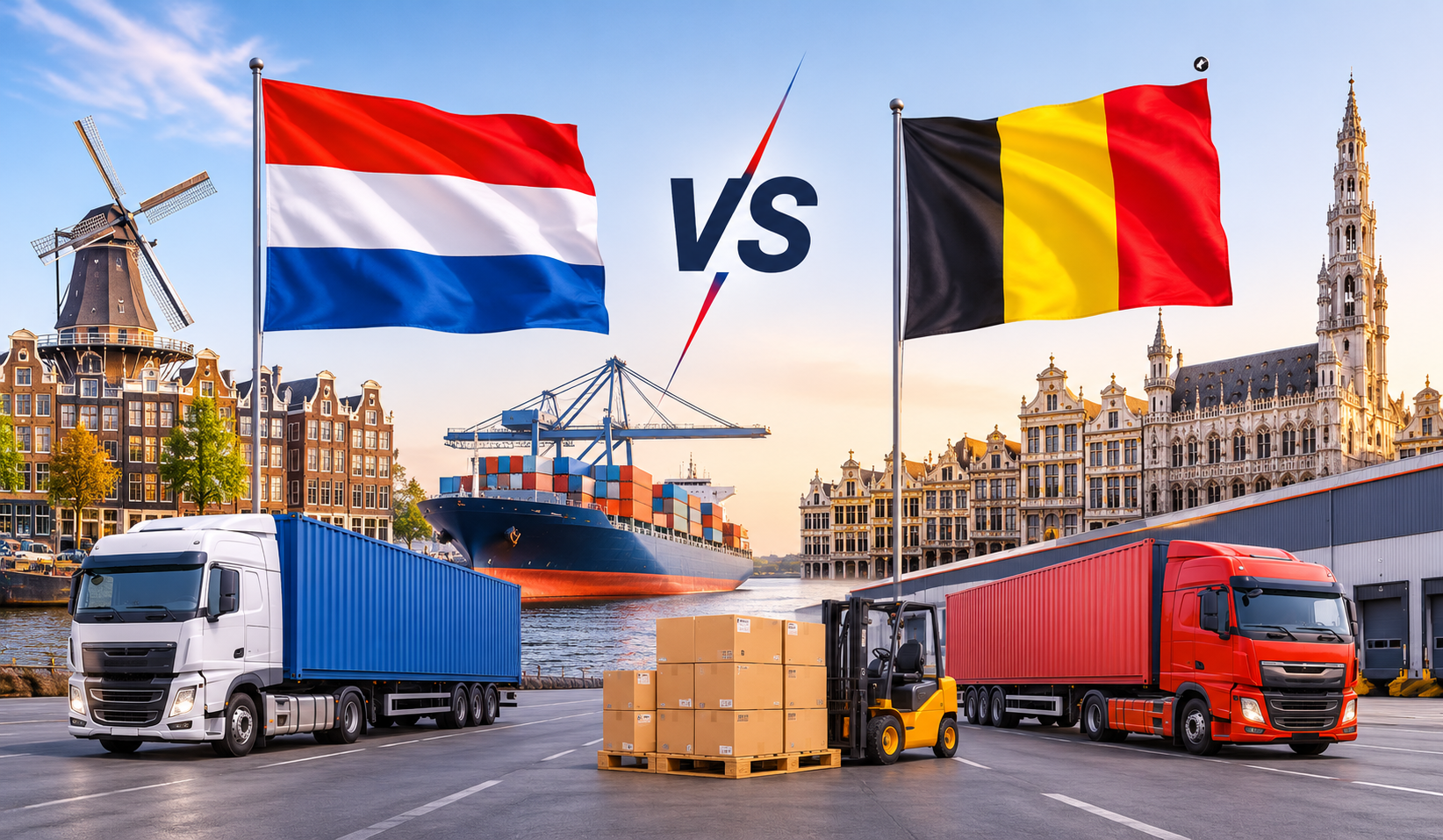
Your brand may be ready to enter the European market, but choosing the wrong logistics hub can lead to higher costs, delayed deliveries, and lost customers.
Imagine a brand based outside the EU that wants to sell its products across Europe. To deliver orders faster, the business decides to store its products in the Netherlands or Belgium. It finds a warehouse with affordable rent, sets up its business, and ships its stock to Europe.
Everything seems ready to go, but soon, problems begin: shipments arrive late, customers cancel orders, and import VAT ties up money the brand needs to buy more stock. Delivery costs are also higher than expected because the warehouse is too far from its main customers.
The brand thinks about moving to another location, but it has already signed a lease and spent money setting everything up. Moving means more costs, more work, and possible delays in delivering orders.
Instead of helping the brand grow, the wrong warehouse location is eating into its profits. This is why choosing between the Netherlands and Belgium for logistics matters. Both countries offer access to European markets, but their warehouse costs, transport links, and tax requirements can differ.
In this guide, we compare the Netherlands and Belgium to help brands understand these differences, avoid costly mistakes, and choose the right location before setting up their European operations.
Why Does the Location of Your European Hub Matter?
A European hub helps your business store products closer to your customers. You can keep your stock in a warehouse, prepare orders, and ship them to customers across Europe. The location of your hub affects how quickly orders arrive and how much you spend on storage and delivery.
Most businesses believe that the cheapest warehouse is the best choice, but the closest or cheapest warehouse is not always the best choice. For example, a brand may find cheap warehouse space in one country but pay more to transport goods to its main customers. Another brand may choose a location near a major port but struggle with limited warehouse space or delays during busy periods.
Your choice also affects how you import goods, handle VAT, and register your business. These decisions can affect how much money you need to start and how easily you can manage your operations.
Before choosing the best country for a logistics hub in Europe, look at the whole picture: how your goods will arrive, where your customers live, what storage and transport will cost, and what legal steps you need to complete.
Which Port Is Better: Rotterdam or Antwerp?
The Netherlands and Belgium both have major ports for businesses importing products into Europe. The Netherlands has the Port of Rotterdam, while Belgium has the Port of Antwerp. Both ports help businesses receive goods from other countries and transport them to warehouses across Europe. Companies planning cross-border trade can also explore different import and export business opportunities in the Netherlands.
When comparing the Netherlands vs. Belgium for logistics, look at where your products will arrive and how much it will cost to move them to your warehouse.
For example, if shipping through Rotterdam costs less but your warehouse is far from the port, your transport costs may increase. The same applies to Antwerp.
That's why, before choosing between the Netherlands and Belgium, compare the shipping costs, warehouse location, and delivery costs. This will help you choose the option that saves your business money and makes it easier to deliver orders to customers.
Which Country Has Fewer Shipping Delays?
Both the Netherlands and Belgium can experience shipping delays. Bad weather, port congestion, strikes, and transport problems can hold up goods in either country.
For a brand, even a short delay can create problems. If stock does not reach the warehouse on time, customers may have to wait longer for their orders. Some may cancel and buy from another seller.
Instead of assuming one country is always faster, ask shipping companies how long deliveries usually take on your route. Check whether they have other routes available if a shipment is delayed.
Also, consider how long it takes to move goods from the port to your warehouse. Getting products into the country quickly will not help much if they take too long to reach your storage facility.
Which Country Costs Less to Operate In?
The Netherlands is not always cheaper than Belgium, and Belgium is not always the more affordable option. Your total costs depend on your products, stock levels, order volume, and business needs.
When comparing both countries, consider:
- Warehouse rent: How much will you pay to store your products each month?
- Transport: How much will it cost to bring goods from the port to the warehouse and deliver orders to customers?
- Order handling: What will you pay to pack orders, send them out, and manage returns?
- Business setup: How much will company registration, accounting, and tax support cost?
- Import taxes: When will you need to pay them, and can you use an arrangement that helps manage the cost?
Ask warehouse and transport providers for prices based on your expected stock and orders. This will help you understand which country is more affordable for your business overall.
Do not choose a warehouse just because its rent looks cheap. Look at what you will spend to run the whole operation.
How Do Business and Tax Requirements Differ in the Netherlands and Belgium?
Before choosing the Netherlands or Belgium for your European warehouse, check the company registration, tax, and customs requirements in each country.
If your business is based outside the EU, you may need to register for VAT, arrange customs procedures, and meet local business requirements. The exact steps depend on your business structure and how you plan to import and sell your products.
The Netherlands and Belgium have different procedures for handling these requirements. Compare the paperwork, costs, and tax arrangements in both countries before making your decision.
Choosing the right location from the start can help you avoid unexpected costs, paperwork delays, and problems when importing and delivering your products.
Why Do Many Non-EU Companies Choose the Netherlands?
The Netherlands is an attractive option for many international brands because it has a major seaport, established transport connections, and access to nearby European markets.
Brands importing goods from outside the EU can bring products through Rotterdam, store them in a Dutch warehouse, and send orders to customers in different countries. These transport links make the Netherlands a good option for brands that want to store their products in one place and deliver orders to customers across several European countries.
The Netherlands may also suit businesses that need help with company registration, tax matters, customs, and warehouse services. However, choosing the Netherlands does not automatically mean lower costs or faster deliveries. Warehouse rent, transport prices, and the location of your customers still matter.
The Netherlands is worth considering when its transport network, warehouse options, and business services fit your needs.
When Is Belgium the Better Choice?
Belgium may be a better option when your main customers, suppliers, or business partners are closer to Belgian logistics centres.
Antwerp provides international shipping connections, while Belgium's location offers access to nearby markets. If a warehouse in Belgium makes deliveries to your customers easier and cheaper, it may be the better choice for your brand.
However, do not assume that Belgium will always cost less. Compare warehouse rent, transport charges, import taxes, and the cost of setting up your business.
Belgium can be a good choice when it offers a more practical and affordable way to move your products from the port to your customers.
How Does FirmNL Help You Set Up Your European Hub?
Once you decide to use the Netherlands as your European hub, the next step is to prepare your business for operations. Your brand must also arrange the registrations, tax support, and logistics services needed to start operating.
FirmNL helps international businesses set up in the Netherlands. Its services include company formation Netherlands, VAT and tax support, customs assistance, and warehousing and fulfilment services.
This support can help brands that do not have a local team to manage the process themselves.
Before getting started, explain where your products come from, which countries you plan to sell to, and how many orders you expect to handle. This makes it easier to understand which services your business may need.
If you are still deciding between the Netherlands and Belgium, compare the costs and requirements of both countries before committing to a warehouse.
Set Up Your European Hub with Confidence
Expanding your business into Europe takes more than finding a warehouse. You also need to plan your shipping, taxes, and business setup to avoid delays and extra costs.
The right location can help you deliver orders faster, keep costs under control, and reach more customers across Europe.
Not sure where to start? Contact FirmNL for help with company registration, VAT and tax, customs, warehousing, and fulfilment in the Netherlands. We can help you understand the requirements and take the next step towards expanding your business in Europe.
Frequently Asked Questions
1. Is the Netherlands or Belgium better for logistics?
Both work well. Choose the one closest to your customers and your incoming goods. The Netherlands often suits Germany and northern Europe, and Belgium often suits France, the UK, and Brussels.
2. Which port should I use to import products into Europe?
Rotterdam and Antwerp are both excellent. Ask for shipping prices to both, then add the cost of trucking goods to your warehouse. The lower total is usually the better choice.
3. Can a business based outside the EU store products in the Netherlands or Belgium?
Yes. You need to follow local tax and customs rules, which usually means getting a VAT number and an EORI number.
4. Can I avoid paying import VAT immediately?
Often, yes. The Netherlands (Article 23) and Belgium (ET14000) both let you report import VAT in your regular return instead of paying it at the border. Foreign companies usually need a local representative to use it. The exact rules depend on your setup.
5. Should I choose a warehouse based only on rent?
No. Also compare transport, order handling, taxes, and delivery costs. A slightly pricier warehouse closer to your customers can cost less overall.
Other Related Articles

Ready to Launch
Your

Dutch Business
Dutch
Business
FirmNL specializes in helping foreign entrepreneurs establish a presence across the EU. From Dutch BV incorporation to tax compliance, sales outsourcing and EU fulfillment — we provide solutions tailored to your goals.